Why "Curation Over Accumulation" Is the New Private Markets Playbook for Advisors
How Financial Advisors Can Build a Private Markets Offering That Actually Differentiates Their Practice
By the time a client asks you about SpaceX, the opportunity that made it interesting is usually already gone.
That's not a knock on the client — it's just how information travels. The investors who got into SpaceX's 2019 funding round, at a valuation in the $50–100 billion range, are now sitting on a stake worth well over a trillion dollars. By the time SpaceX's IPO made headlines and clients started asking their advisors how to get in, the return that mattered had already happened years earlier.
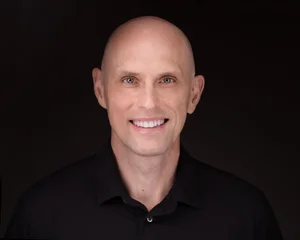
That tension is the center of Episode 151 of the Modern Financial Advisor Podcast, where Frank Burke, Chief Investment Officer at PPB Capital Partners, joins Mike Langford to talk about why private markets access has become one of the clearest ways for advisors to differentiate their practice — and why most advisors are further behind on this than they realize.
Frank has spent his career inside the private markets, joining PPB Capital Partners in 2017 to help build out the firm's Capital Market Solutions platform. PPB itself has spent almost twenty years helping RIAs across the country access private markets and alternative investments, building custom, white-labeled fund structures that let advisors offer proprietary alts exposure under their own brand.
If you've ever wondered how to talk to clients about private markets without overpromising, how to vet a manager you've never worked with, or how to build something in your practice that actually looks different from the advisor down the street — this episode is your playbook.
Connect with Frank Burke on LinkedIn PPB Capital Partners
What You'll Learn in This Episode
Why the SpaceX effect is creating both pull (client-driven) and push (advisor-driven) demand for private markets access
What "curation over accumulation" means — and why building your own white-labeled fund structure creates real differentiation, not just another product
The liquidity education gap tripping up advisors and clients in interval funds and private credit
How legal settlement finance works as a differentiated, low-risk private credit strategy
Why operational due diligence matters as much as investment strategy when vetting a private markets manager
Why advisors don't have to be a hero — and how to talk to clients about alt strategies you don't fully understand yourself
How AI's energy demand is quietly creating a "picks and shovels" opportunity in private credit
Why This Matters for Financial Advisors Right Now
Frank put it plainly on the show: most advisors are in a commoditized business. You sell largely the same stocks, bonds, and mutual funds, charge about the same fees, and offer roughly the same services as the advisor across town. In large part, clients choose you because of you — the relationship, the trust, the way you make them feel understood.
Private markets access changes that equation. It's one of the few places an advisor can hand a client something genuinely unavailable anywhere else — a fund structure with their own name on it, built around their own vision, their own client base, their own specialty.
And the demand is real. With SpaceX's IPO behind us — and Anthropic and OpenAI's expected offerings not far behind — clients are increasingly asking advisors how they get access to opportunities like this. The catch, as Frank explains, is that by the time an investment is generating that kind of attention, the return that mattered has usually already been made.
Curation Over Accumulation: What It Actually Means
This is the phrase from the episode that will stick with you longest.
Most advisors think about alts access as a menu — a list of funds to pick from. Frank's framing is different. When PPB works with an advisor for the first time, the first question isn't "what do you want to allocate to." It's "what are you actually trying to solve, and what's your vision?"
From there, PPB helps the advisor build a custom, white-labeled fund of funds — a proprietary structure built around where that advisor sees value in the private markets. Some advisors want direct investing in sectors where their own client base has real expertise. Some want to run their own real estate fund. Others just want a curated selection of smaller, undiscovered managers they'd never find on their own. Either way, the fund carries the advisor's name, not PPB's.
As Frank explains it, that ownership is the whole point:
"It's that advisor's fund of funds, right? With their name right on it — and it creates a sense of ownership, a sense of pride that they have something out there that their peers don't. And that's what's driving a lot of our growth with these types of structures." — Frank Burke, Chief Investment Officer, PPB Capital Partners
That's curation over accumulation: not gathering as many alt products as possible, but building one differentiated structure that's actually yours.
The Newsweek Indicator: Why Being Early Beats Being Right
Mike shared a story from his time working at Fidelity's corporate headquarters in Boston, home to the company's famous "chart room" — a kind of museum of market history where the walls are lined with charts and old Newsweek covers marking key moments. The lesson passed down on the tour: by the time an investment hits the cover of Newsweek, it's over. That's the signal for smart money to get out — and for the general public's money to start piling in.
It's a useful mental model for private markets. Investors who got into SpaceX at that $50–100 billion valuation made roughly 50x their money by the time the company went public north of a trillion dollars. Clients hearing about SpaceX for the first time today, after the IPO, are hearing about it at the Newsweek moment — not the early one.
That gap, between when an opportunity is genuinely early and when it becomes common knowledge, is exactly where Frank sees the biggest opportunity for advisors who can get clients access sooner.
Legal Settlement Finance: The Alt Asset Hiding in Plain Sight
One of the most concrete examples Frank shared is a strategy most advisors have never heard of: legal settlement finance.
Here's how it works. When a legal case settles, the cash is often sitting in escrow — guaranteed to be paid, but not immediately available. Law firms still have to pay attorneys, clerks, and private investigators in the meantime, and traditional litigation finance — lending against cases that haven't settled yet — can cost a law firm north of 25% in effective cost of capital, since it's really a venture-style bet on whether the case wins at all.
Legal settlement finance is different. It only lends against cases that have already settled, where the money is real and simply waiting to move through escrow. That structure lets investors earn mid-teens returns with no case risk — the underwriting risk is limited to which plaintiffs may ultimately not be eligible for a distribution, not whether the case itself succeeds.
It's the kind of strategy most advisors would never think to ask about — and exactly the kind of thing PPB's curated platform exists to surface.
How PPB Vets Managers So Advisors Don't Have To
Private markets come with a structural challenge public markets don't have: there's no standardized reporting, no uniform way to verify what a manager is telling you. Frank says the biggest risk here is operational, not strategic — many first-time fund managers are excellent at picking investments but have never actually run a business before. Controls, processes, cybersecurity, the back-office fundamentals — that's where inexperienced managers most often stumble.
PPB partners with a third-party operational due diligence firm to vet managers before they go on the platform, and advisors building a custom fund with PPB can lean on those same relationships even when they bring their own manager to the table. As Frank put it, it comes down to a "sleep at night factor" — advisors can tell clients the operational vetting has already been done, not just the investment thesis.
You Don't Have to Be a Hero
This might be the most reassuring moment in the episode for advisors who feel behind on alts.
Frank's advice: you don't have to master every strategy to offer private markets access. Some structures are genuinely simple to explain — a real estate fund is just buying properties. Others, like AI-driven quantitative strategies, are close to a black box even for sophisticated investors. The advisor's job isn't to understand every mechanism. It's to trust the manager's track record and talk to clients about what they're personally comfortable explaining.
"You don't have to decide you're all of a sudden going to be an expert in all this AI tech that's going on. If that feels over your head, guess what — you don't have to invest in those, and you don't have to bring those to your clients." — Mike Langford, host, Modern Financial Advisor Podcast
The same logic extends to AI's ripple effects across the private markets. Frank pointed to a growing theme on PPB's platform: energy infrastructure. As AI data centers drive up electricity demand, smaller power companies are seeing what Frank called "an AI bump" — private credit opportunities tied to real, quantifiable infrastructure rather than the AI technology itself. It's the modern version of picks and shovels: you don't have to bet on the miners to profit from the gold rush.
Frank's 10-Year Outlook for Private Markets
Asked to look ten years out, Frank pointed to two forces that will reshape advisor access to alts: tax efficiency and democratization. He expects more advisors to place alternatives inside IRAs specifically for tax reasons — strategies like legal settlement finance are taxed as ordinary income, so tax-advantaged accounts make a real difference. And he expects registered offerings and interval funds to keep expanding access for smaller clients, driven in part by continued high-profile IPO activity from companies like Anthropic and OpenAI.
The throughline for advisors: the liquidity education Frank described earlier in the episode is only going to matter more as access widens.
Resources Mentioned in This Episode
PPB Capital Partners — Frank Burke's firm, building custom private fund structures for RIAs
PPB's Insights page — webinars and thought leadership from the PPB team, available at ppbcapitalpartners.com
Investing in Private Credit for AI Infrastructure Companies - Mike mentioned an episode of the 6 × 6lock Podcast where Stanton Ray from Columbia Threadneedle shared how there are some really interesting private credit investment happening for power plants that are generating the electricity for the data centers that power AI.
Related Episodes Worth Your Time
"How Much Have You Got?" — Bob Veres on the Awkward Present and Bold Future of Financial Planning — Bob's argument that the AUM model is on borrowed time and that "inertia" is quietly putting comfortable firms at risk pairs well with Frank's differentiation angle. Both episodes are essentially making the same case from different directions: standing still is the actual risk, not trying something new.
Why Serving Business Owners Is the Secret Sauce, with Jason Early of RISR — Jason's "riches in niches" framing connects nicely to Frank's point about lower-middle-market private equity and "mom and pop" businesses being some of PPB's most successful current plays — different side of the same private-business-value coin.
Michael Kitces on Creating Gravity to Attract Clients — Kitces's whole thesis is that differentiation through focus (not doing more, but doing something distinct) is what actually attracts clients. That's the marketing-side version of what Frank is describing on the product side with curation over accumulation.