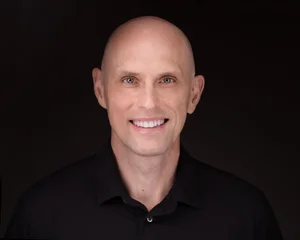
Stop Being a Source. Start Being a Resource: Featuring Ben Lewis from The Financial Planning Association
How Financial Advisors Can Build a Media Profile That Drives Real Business in the Age of AI
Financial advisors are facing a paradox. AI is flooding every journalist's inbox with generated press releases, mass-blasted pitches, and "thought leadership" content that reads like it was assembled by a committee of robots. And yet, the advisors who understand what's actually happening right now have a bigger media opportunity than at any point in the last two decades.
That's the core argument Ben Lewis makes in Episode 150 of the Modern Financial Advisor Podcast — and he's one of the few people in the financial services industry uniquely qualified to make it.
Ben is the Chief Communications and Development Officer at the Financial Planning Association (FPA), the architect of FPA MediaSource, and the author of Perfecting The Pitch: Creating Publicity Through Media Rapport. He's spent nearly 25 years at the crossroads of financial services and media — running his own PR firm, training CFP® professionals how to communicate with journalists, and building a platform that has now received over 10,000 journalist inquiries with a 64.5% repeat journalist rate.
If you've ever wondered how to get quoted in The Wall Street Journal, Kiplinger, CNBC, or USA Today — this episode is your roadmap.
Connect with Ben Lewis on LinkedIn
Download Ben's whitepaper: The Human Edge: Why Relationship-Driven PR Still Wins in the Age of AI
What You'll Learn in This Episode
Why the explosion of AI-generated content is actually the best opportunity for authentic financial advisors to stand out
The critical difference between being a source and being a resource — and how to move from one to the other
How to use your client question notebook to build a steady pipeline of media pitches
How to recognize when a single question becomes a trend — and why that changes everything for journalists
How FPA MediaSource works and what advisors who use it well are actually doing differently
Why compliance culture is training advisors to say nothing worth quoting
The handwritten thank-you note almost no one sends anymore — and why it works
Why This Matters for Financial Advisors Right Now
Here's a question worth sitting with: if a prospective client Googled your name today — or typed it into ChatGPT, Claude, or Gemini — what would they find?
For most financial advisors, the honest answer is: not much. Maybe a bio page on their firm's website. A LinkedIn profile. If they're lucky, a few social posts.
Now imagine what they'd find if you'd been quoted in a New York Times personal finance story. Or featured in a Kiplinger piece on retirement planning. Or cited in a CNBC segment about market volatility.
That's the difference between being someone a prospect hears about and being someone a prospect trusts before they've ever met you.
Ben Lewis has a phrase for this: earned media vs. advertising. When a journalist quotes you, they're vouching for you. An independent professional with no financial relationship to you, no obligation to do you any favors, looked at what you had to say and decided it was worth sharing with their audience. As Ben puts it: "That stands out way more than spending a whole bunch of money on advertising."
The challenge most advisors face isn't that they lack expertise. It's that they've never been shown how the media relationship actually works. And in 2025, with AI generating a sea of sameness in every journalist's inbox, the advisors who show up as genuine, knowledgeable humans have a window of opportunity that won't stay open forever.
The Source vs. Resource Distinction That Changes Everything
This is the concept from the episode that will stick with you longest.
A source is someone a reporter calls when they're already working on a story and need a quote to fill a gap. You're useful in that moment. Then they move on. You may not hear from that journalist again for years — if ever.
A resource is someone a journalist contacts before they even know what story they're writing, because they trust that person to surface something worth exploring. A resource is proactive. A resource is hard to replace.
The path from source to resource runs entirely through relationship. And as Ben explains, building a relationship with a journalist isn't mysterious or complex — it's the same set of behaviors that makes any relationship work. You show up consistently. You deliver what you promise. You focus on what they need, not just what you want. You make their job easier. Over time, they start to think of you first.
The 64.5% repeat journalist rate on FPA MediaSource isn't magic. It's what happens when financial professionals treat media interactions as the beginning of something rather than a transaction.
The Client Notebook: Your Pitch Pipeline Is Already Full
One of the most immediately actionable ideas in this episode comes from Ben's guidance on how to start generating media pitches — and it requires nothing more than a notebook.
Keep it by your phone or your computer. Every time a client calls or emails with a question, write it down. What was the question? What was the situation they were facing?
At the end of the week, review the list. Identify one question that you don't think the media is covering well. Jot down three quick bullet points: here's my opinion on this, here's why it matters, here's what clients need to know. Find a journalist who's been writing about related topics. Send them a short note — 30 seconds to read, no longer.
That's a pitch. And here's the thing that most advisors miss:
One client question is a story. Three, four, or five of the same question in a week is a trend. And trends are what the media actually wants. If multiple clients are suddenly asking you about the same topic — whether that's sequence of return risk, Social Security timing strategy, or what happens to their portfolio if X happens — that's a data point that a journalist will find genuinely valuable. You're sitting on this material every single day.
"The moment a journalist sniffs any desire on your part to be self-promotional — that this is about you, the planner, and not the story you have — say goodbye. It's not gonna happen. Go into every media interaction genuinely wanting to inform, educate, and enlighten. Through that, you can be positioned as the expert." — Ben Lewis, Chief Communications and Development Officer, Financial Planning Association
FPA MediaSource: The Tool Most FPA Members Aren't Using Fully
If you're a CFP® professional and an FPA member, you have access to one of the most underutilized business development tools in the industry.
FPA MediaSource is a platform that connects journalists — from CNBC and The New York Times to Kiplinger and USA Today — directly with FPA members who can serve as expert sources. Journalists submit a query describing the story they're working on and their deadline. That query goes out to participating FPA members. Members respond with their perspective. The journalist gets usable content from credentialed professionals, and the advisor gets a media credit.
Since launching, MediaSource has sent out over 10,300 queries and generated more than 69,000 CFP® professional responses. The 64.5% repeat journalist rate means reporters keep coming back — not because they have to, but because the quality of responses they're getting from FPA members is genuinely useful.
Ben shared the story of one member who had been participating in MediaSource for just four months. He had appeared in 50 different news stories in that time. His website now carries logos from every major outlet — the kind of social proof that builds instant credibility with prospective clients.
The advisors who use MediaSource most effectively follow a simple set of principles:
Lead with your opinion, not your data
Keep responses original and brief
Don't use AI to write your response — journalists can tell, and they will stop calling
The Human Edge: Why Authenticity Is the Competitive Advantage
Ben's whitepaper, The Human Edge: Why Relationship-Driven PR Still Wins in the Age of AI, opens with a line from 2009: advisors were asking him how to separate themselves from the blowback of the financial crisis, of Madoff, of the assumption that anyone who touched money must be doing something wrong.
Sixteen years later, the question is different but the answer is the same.
Today's noise isn't Madoff. It's AI-generated content. It's the 26-year-old in their basement with a ring light and a strong opinion about Bitcoin. It's mass-blasted pitch emails with the reporter's name auto-inserted in the subject line. It's "thought leadership" content that sounds professional but has no voice, no perspective, and no soul behind it.
And here's the paradox Ben argues: when everyone else is generating, showing up like a human being is a competitive advantage.
Smaller newsrooms don't mean fewer opportunities for advisors — they mean journalists rely more heavily on trusted sources they've already vetted. When a reporter is on a two-hour deadline and needs an expert quote, they're not cold-searching for someone new. They're calling the person who responded promptly last month and gave them something genuinely useful.
That's the human edge. And as Ben puts it near the close of the episode: "Nobody hands you that trust. It's up to you, the individual, to earn it. And you earn it by bringing your own innate humanness to the relationship."
Resources Mentioned in This Episode
The Human Edge: Why Relationship-Driven PR Still Wins in the Age of AI — Ben Lewis's whitepaper, available at FPA MediaSource
FPA MediaSource — The platform connecting CFP® professionals with journalists across major national publications
Perfecting The Pitch: Creating Publicity Through Media Rapport — Ben Lewis's book on media relations for financial professionals (Larstan, 2007)
Never Eat Alone — Keith Ferrazzi's book on relationship-building, cited by Ben as foundational to his thinking on source vs. resource
FPA Live — Ben's interview series featuring media professionals and communications experts relevant to financial planners
Related Episodes Worth Your Time
Getting Your Financial Business Featured in the Media with Allie Zendrian of AtoZ Communications — Allie brings the rarest possible perspective to this conversation: she spent years on the other side of the pitch email as a reporter at Forbes, Institutional Investor, and TheStreet — deciding what was worth covering and what went in the trash. Now she helps advisors and FinTech companies get their stories told. Her episode pairs directly with Ben's: if Ben gives you the mindset and the framework, Allie gives you the journalist's-eye view of exactly what lands and what doesn't.
How AI Will Power a New Era of Hyper-Growth for Financial Advisors and Wealth Management Firms — Ian Karnell, CEO of VastAdvisor, makes the case that AI isn't just a productivity tool for advisors — it's a growth engine. This episode is the natural counterpart to Ben's argument: Ben explains why human authenticity is the competitive advantage in the age of AI, and Ian explains how to use AI strategically to amplify that advantage rather than replace it. Together, they form a complete picture of how the smartest advisors are thinking about technology right now.
Love Your Customer or Quit — The 4 Pillars of Client Experience That Actually Matter — The through-line between this episode and Ben's is easy to miss but worth making explicit: the same qualities that make a journalist want to call you back — responsiveness, genuine helpfulness, showing up consistently, making their job easier — are the exact same qualities that make clients stay, refer, and trust. This episode builds the client-side case for the human edge Ben is describing.