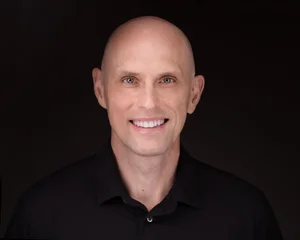
Getting Your Financial Business Featured in the Media with Allie Zendrian of AtoZ Communications
There is a version of PR that almost every financial advisory firm and fintech company has tried at least once. It starts with a junior employee — or a well-meaning founder — sitting down to write a press release. They run it through an AI tool to clean it up. They paste it into an email, pull a list of journalist contacts from a database, and hit send. A week later, nothing. They assume the press didn't care, and they move on.
Here's what they don't know: the reporters on the other end knew exactly what they were looking at. They spotted the AI polish, scanned for the hook that wasn't there, and moved on in about twelve seconds.
In this episode of the Modern Financial Advisor Podcast, recorded live at the Nitrogen Fearless Investing Summit in Denver, Colorado, Mike Langford sits down with Allie Zendrian — founder of AtoZ Communications and a former financial reporter who covered wealth management and fintech for Forbes, Institutional Investor, and TheStreet. Allie brings the rarest possible credential to the communications space: she spent years on the other side of the pitch email, deciding what was worth covering. Now she helps advisors and fintech companies get their stories told.
"Doing your own PR is penny wise and pound foolish."
~ Allie Zendrian, Founder, AtoZ Communications
Connect with Allie Zendrian on LinkedIn
What You’ll Learn in This Episode
Why AI-generated press releases are quietly killing your credibility — and what reporters actually think the moment they land in their inbox
The single most important question to ask before you pitch any story, any reporter, or any media outlet — and why it has nothing to do with your product features or your latest announcement
Why advisors and fintech companies doing their own PR is "penny wise and pound foolish" — and what a more realistic, cost-effective approach actually looks like
How Allie built one of the most connected networks in the wealth management and fintech space in under two years — starting from her days covering the industry at Forbes
What it was like going from the Forbes newsroom to the "dark side" of PR — and why she has no regrets about making the switch
Why This Matters for Financial Advisors
There is an uncomfortable truth about the way most financial advisory firms and fintech companies approach their public presence: they either do nothing, or they do something that actively works against them.
The "do nothing" camp is easy to understand. Media outreach feels unpredictable, the payoff is hard to measure, and advisors already have more things competing for their attention than they can handle. So PR becomes the thing that gets pushed to next quarter, and then the quarter after that, until eventually it becomes the thing the firm just doesn't do.
The "do something badly" camp is trickier, because it often involves genuine effort. The press release gets written. The media list gets assembled. The emails go out. But the result is the same as doing nothing — or sometimes worse, because now there's a reporter out there who has mentally filed your firm under "people who don't know what makes a story." That association is hard to undo.
Allie Zendrian is one of the few people in the financial services PR space who can speak to both sides of this equation from direct personal experience. As a reporter at Forbes, Institutional Investor, and TheStreet, she received hundreds of pitches a week. She developed very fast, very accurate instincts for what was genuinely interesting and what was noise dressed up in press-release formatting. And the single fastest way to end up in the latter category, she explains in this conversation, is to send something that was clearly generated by AI and never seriously interrogated for whether it had a reason to exist.
The AI press release problem is more specific than it might sound. It's not just about tone or prose quality — experienced journalists can spot the pattern regardless of how polished the writing is. The real issue is what the AI polish signals: that the company hasn't done the hard work of asking whether their story is actually worth telling. That question — why would a reporter's readers care about this? — is the one most pitches never answer. It's not about your new feature, your funding round, your rebrand, or your award. It's about what changes in the world of the person reading the article. Allie walks through exactly how to think about that question in a way that's genuinely useful rather than just conceptually correct.
The conversation also gets into the economics of communications — specifically, why advisors and fintech founders who try to do their own PR almost always underinvest in it, get disappointing results, conclude that PR doesn't work for them, and move on. Allie calls this penny wise and pound foolish, and she's right. The cost of a meaningful media mention in the right outlet — the kind that builds credibility with exactly the clients or partners you're trying to reach — is difficult to calculate in advance, but it compounds in ways that almost no other marketing investment does. The advisor who gets the right coverage in the right place doesn't just get a short-term traffic bump. They get a permanent reference point that future clients and partners can find years later.
Resources Mentioned:
AtoZ Communications — Allie's PR and communications firm for financial advisors and fintech companies
Brand News — Allie's newsletter covering the business of wealth management and fintech
Nitrogen Fearless Investing Summit — Where this episode was recorded live in Denver, Colorado
Related Episodes You May Like
If you enjoyed this conversation, you'll love these episodes too:
The AI Paradox: How a Notetaking App Is Making Financial Advisors More Human featuring Matt Halloran, Co-Founder of Zocks Matt Halloran has spent his career helping financial advisors communicate better — first as a coach, now through the Zocks AI platform that frees advisors from note-taking so they can be fully present in client conversations. His perspective on the relationship between technology, authenticity, and advisor communication connects directly to what Allie discusses about how the best stories come from advisors who are genuinely engaged with their clients' lives. 🎧 Listen to the Matt Halloran / Zocks episode
How Financial Advisors Can Create Gravity to Attract Clients vs Fighting Time and Scale Constraints featuring Michael Kitces, Co-Founder of XYPN Michael Kitces is one of the most recognized thought leaders in financial planning — a standing he built almost entirely through relentless, consistent content creation and media presence over many years. His conversation about how advisors can create "gravity" to attract clients rather than constantly chasing them is the strategic framework that sits behind everything Allie talks about tactically. If you want to understand why media coverage matters at a business-model level, this is the episode to pair with it. 🎧 Listen to the Michael Kitces / XYPN episode
"How Much Have You Got?" — Why the AUM Model Is on Borrowed Time featuring Bob Veres, Publisher of Inside Information Bob Veres has been one of the most important media voices in the financial planning industry for decades. His Inside Information newsletter has shaped how advisors think about their profession longer than most advisors have been in business. Listening to Bob talk about where the industry is headed — and the business model pressures that are forcing advisors to rethink everything — gives important context for why advisors who build a public profile now are positioning themselves well for what comes next. 🎧 Listen to the Bob Veres / Inside Information episode