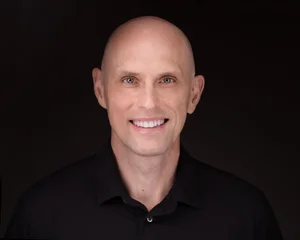
"How Much Have You Got?" — Bob Veres on the Awkward Present and Bold Future of Financial Planning
Some conversations are comfortable. This is not one of them.
Recorded live at the Fearless Investing Summit in front of a room full of financial professionals, I sat down with Bob Veres — veteran industry journalist, consultant, and publisher of the widely read Inside Information newsletter — for one of the most candid conversations about the financial planning profession I've had in 144 episodes of this show.
Bob has been watching this industry evolve since before most advisors reading this post were in the business. He's seen the transitions, the extinction events, the inertia, and the pockets of genuine progress. And right now, he sees a profession that is stuck in what he calls an "awkward present" — caught between where it came from and where it needs to go.
If you are comfortable with how things are running in your practice, this episode might make you a little uncomfortable. That's probably a good thing.
Connect with Bob Veres on LinkedIn
What You’ll Learn in This Episode
Why Bob believes financial planning is not yet a true profession — and what it would take to become one
The single biggest structural flaw in the AUM model, explained in one devastating sentence
Why the next generation of clients and advisors will reject the status quo — and what that means for established firms
How "inertia" is the silent killer of advisory businesses that are otherwise thriving today
Bob's avalanche theory — why you won't see the disruption coming until it's already arrived
How AI will help advisors serve twice as many clients without losing the relationship quality that defines great advice
Bob's vision for a future financial planning ecosystem built around specialization and a "fiduciary superconductor" referral network
Why the Present Is So Awkward
I opened the conversation by asking Bob about a phrase he'd used in a recent interview that stuck with me: "the present is awkward."
His answer cut right to the heart of the identity problem this profession has been wrestling with for decades.
The core issue, Bob argues, is that financial planning calls itself an industry when the people he most respects think of it as a profession. And the two have very different standards. A profession has a common language, a shared ethos, and a clear value proposition that consumers can understand at a glance.
Right now, financial planning has none of those things in a consistent way. You've got the NAPFA people, the FPA people, the broker-dealer folks, the wirehouse advisors — and within each group, sub-tribes with entirely different philosophies about how they charge, what they offer, and who they serve.
The result? Consumers don't really know what a financial advisor does. And that's a problem that goes far deeper than a marketing challenge.
"If you go to a doctor, you're pretty sure you know what a doctor does. If you go to a lawyer, you know what the lawyer does. When you go to a financial planner — well, do you sell insurance? Do you take commissions? Do you take an asset management fee, and how much of that is hidden?"
~ Bob Veres
Resources Mentioned:
Fearless Investing Summit 2026 — Hosted by Nitrogen Wealth
Inside Information Newsletter — Bob's monthly newsletter and research publication
Related Episodes You May Like
If you enjoyed this conversation, you'll love these episodes too:
The RIA Fee-for-Service Revolution with Alan Moore, Co-Founder of XYPN
Alan makes the case that fee-for-service models don't just serve younger clients better — they unlock an entirely new growth engine for advisors willing to make the shift.
Why Advisors Who Embrace AI and New Business Models Will Be the Last Ones Standing with Steve Lockshin, Founder of AdvicePeriod and Vanilla
Steve and Bob are singing from the same hymnal on the AUM model — here's another bold take on what the future of pricing and technology looks like for advisors who are willing to move first.
How Financial Advisors Can Create Gravity to Attract Clients with Michael Kitces
Bob and Michael Kitces famously disagree on a few things — including whether technology actually makes advisors more productive. Hear Michael's side of the argument here and decide for yourself.