Why Your Clients Don't Need a 75-Page Report (And What to Give Them Instead)
What if the most powerful thing you could hand a client after a meeting wasn't a detailed report — but something their spouse could actually pick up off the kitchen counter and understand?
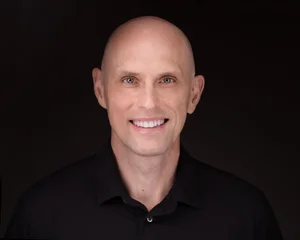
That's the question at the heart of this conversation with Alison Susko, VP of Community at Asset-Map. Recorded live at the Fearless Investing Summit in Denver, this episode is a refreshingly honest look at why simplicity might be the most underrated competitive advantage in financial planning today.
Alison has spent nearly 20 years in the industry — including close to a decade at eMoney Advisor before joining Asset-Map — and she brings a practitioner's perspective to a discussion that every advisor working in a complex, report-heavy environment needs to hear.
"Clients aren't shopping for another advisor because of a rate of return. They're potentially shopping around because they never got to know their spouse's advisor — or they never felt that connection where they really knew what was going on."
— Alison Susko, VP of Community, Asset-Map
Connect with Alison Susko on LinkedIn
What You’ll Learn in This Episode
Why most financial planning reports are essentially useless without the advisor in the room to explain them — and why that's a bigger problem than most advisors realize
Who the "non-CFO spouse" is, why they matter enormously to your client relationships, and what it looks like when they finally see their finances on one visual page
How Asset-Map's new integration with eMoney became their fastest-growing integration of all time — and what that says about where the industry is headed
How JUMP AI can listen to a client meeting and automatically build an Asset-Map report in real time — and what that means for advisor efficiency
Why clients don't leave advisors over rates of return — and what they actually leave over
How Relationship Maps are helping advisors keep track of blended families, gray divorces, step-grandchildren, and three-generation households
The broader industry trend Alison sees clearly: a shift away from complexity and toward relationship-first, visually-driven financial planning
Why the old "husband, wife, and 2.5 kids" planning model simply doesn't reflect the families advisors are serving today
Why This Matters for Financial Advisors
There is a tension that sits at the center of most advisory relationships that almost nobody talks about directly. Advisors are trained to be thorough. Comprehensive. Detailed. And there's real value in that. Nobody is arguing that deep financial analysis doesn't matter.
But there's a difference between the analysis you do for a client and the communication you share with a client. And for too long, the industry has handed clients the former when what they needed was the latter.
Alison puts it plainly: when clients are confused, they can't make good decisions. And a client who can't make good decisions with you will eventually make them without you.
Asset-Map was built on the insight that a single visual page — showing a household's key people, income sources, assets, liabilities, and insurance — does more for client engagement than a detailed report that requires professional translation. Not because the detail isn't valuable, but because the visual opens the conversation in a way that complexity never can.
One of the most striking moments in this episode comes when Alison describes what advisors tell her they hear from clients who see an Asset-Map report for the first time: "This is the first time I've ever seen my finances in a way I could actually consume it." And then: "This is what I've always wanted. I just didn't know how to ask for it."
That's not a technology story. That's a relationship story. And it points to something bigger happening across the industry right now.
The same open architecture trend that has made broker-dealers more flexible about the tools their advisors use is also changing what clients expect from their planning experience. They want to be engaged — not just informed. They want a financial plan that feels like it belongs to them, not one that requires an expert to decode.
This episode also spends time on a topic that's showing up in more and more conversations on the show: multi-generational planning. The traditional model of serving a primary client couple and maybe flagging their heirs is giving way to something much more complex — blended families, late-in-life divorces, grandparents whose priorities have shifted entirely to grandchildren, and younger clients who are now bringing their parents to the table instead of the other way around.
Asset-Map's new Relationship Maps feature is a direct response to that complexity. It gives advisors a way to visually map the whole family — assign assets, flag relationships, track who belongs to whom — so they can walk into every meeting fully oriented to the household as it actually exists. Not as a tidy nuclear family unit, but as the beautiful, messy, ever-changing human reality it is.
That's what client-centered planning actually looks like in practice. And it's exactly the kind of thinking that keeps clients around for decades.
Resources Mentioned:
Fearless Investing Summit 2026 — Hosted by Nitrogen Wealth
Adam Holt’s Podcast Appearance with Mike Langford and John Prendergast of Blueleaf.
Related Episodes You May Like
If you enjoyed this conversation, you'll love these episodes too:
The AI Paradox: How a Notetaking App Is Making Financial Advisors More Human featuring Matt Halloran, Chief Evangelist at Zocks The JUMP AI integration Alison discusses in this episode has a natural companion in the conversation Mike had with Matt Halloran about AI note-taking for advisors. If you want to go deeper on how AI tools are freeing advisors to focus on relationships rather than administrative tasks, this is the episode to queue up next. 🎧 Listen to the Matt Halloran / Zocks episode
SUMA Wealth and the Power of Serving a Specific Community featuring Beatriz Acevedo, CEO & Co-Founder of SUMA Wealth When Alison talks about the younger generation bringing their parents to the financial planning table — especially in immigrant families — it points to something Beatriz Acevedo identified long ago at SUMA Wealth. Beatriz's discovery that young clients on the platform manage an average of three accounts for older family members is one of the most important data points about multi-generational planning in the industry. This episode will change how you think about who the gateway client really is. 🎧 Listen to the Beatriz Acevedo / SUMA Wealth episode
"How Much Have You Got?" — The Awkward Present and Bold Future of Financial Planning featuring Bob Veres, Publisher of Inside Information This one has a special connection — Mike sat down with Bob at the exact same conference, earlier that same day, and Alison actually references the conversation in this episode. Bob has been watching this industry evolve for over 40 years, and his take on the shift away from complexity and toward relationship-first planning runs in the same direction as everything Alison describes. If this episode got you thinking about where the industry is headed, Bob's episode is the next conversation to have. 🎧 Listen to the Bob Veres / Inside Information episode