Why Pre-IPO Investing Isn't an Advisor Problem — It's a Missing Infrastructure Problem
Dean Rubino of KPC Private Funds on why clients are chasing pre-IPO deals without their advisors — and what fiduciaries actually need before they can say yes.
Your client just watched a segment about the next big AI company heading toward an IPO, and now they want in. You hesitate. According to Dean Rubino, that hesitation isn't a mistake. It's a reasonable response to a market that was never built for fiduciaries.
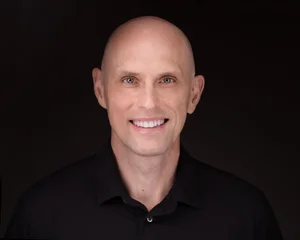
Dean is Co-Founder and CEO of KPC Private Funds, an SEC-registered adviser that gives independent wealth advisors institutional-grade access to private funds. After 25-plus years in private funds, including a stint as CEO and CIO of Hamilton Lane's Richcourt Group, he joins host Mike Langford on this episode of The Modern Financial Advisor Podcast to explain why access to pre-IPO equity has gone direct to consumers, why advisors have been left standing on the sidelines, and how one set of documents, one signature, and one K-1 can change the equation.
Connect with Dean Rubino on LinkedIn and learn more about KPC Private Funds
What You'll Learn in This Episode
Why Dean says the real pre-IPO "mistake" is a market structure issue, as access skips the advisor and goes straight to the end investor
What fiduciary-grade infrastructure looks like: custodial acceptance, proof the seller has the right to sell, and a diligence file that can stand up in a regulatory exam
Why Series D vs. Series E, common vs. preferred, and anti-dilution provisions matter when buying pre-IPO equity
Why private companies are staying private longer, and how value creation has shifted from after the IPO to before it
How one subscription document, one e-signature envelope, and one consolidated K-1 can replace five of each
How pooling capital and investing through a QP-qualifying vehicle can widen access to funds with $10 million minimums
Why the complexity in private markets isn't the investment itself — it's knowing how to evaluate it
Why This Matters for Financial Advisors Right Now
Why are advisors hesitant about pre-IPO investing?
Advisors hesitate because most pre-IPO vehicles were designed for the retail buyer, not the fiduciary. Dean's argument is that the market is going direct to the consumer and bypassing the advisor, who is left saying, "I wouldn't do that because it doesn't have the infrastructure." Clients watching CNBC or listening to Bloomberg Radio get excited about SpaceX or the latest AI names, but they often don't know which questions to ask, where fees may be hidden, or whether the vehicle actually owns what it says it owns.
What infrastructure do advisors need to offer pre-IPO exposure?
Advisors need three things: custodial acceptance so the investment appears on the client statement, reasonable assurance that the seller actually has the right to sell, and a diligence document that can be shown in a regulatory exam. Dean also stresses the investment details. Are you getting Series D or Series E shares? Common or preferred? Are there anti-dilution provisions? Understanding where you sit in the capital structure is as important as knowing the purchase is real.
Why is private market paperwork such a burden for advisors?
Each private investment typically comes with its own subscription agreement, often 50 to 80 pages, plus an offering memorandum and a limited partnership agreement. Dean says those three documents together can exceed 200 pages. Make five investments and you're handling five sets of documents, five sets of signatures, and five e-signature envelopes, multiplied across every client. And because financial advisors typically keep around 90% of client assets in stocks, bonds, and ETFs, they can't afford to spend more than roughly 10% of their time on private investments.
How does KPC simplify private fund investing?
KPC's platform is structured as a fund in which every investor is essentially a "fund of one," so the advisor can build a customized allocation for each client rather than a one-size-fits-all portfolio. According to Dean, an advisor can invest a client across hedge funds, private equity, pre-IPO stock, and co-investments with a single set of documents, a single e-signature envelope, and a single consolidated K-1. KPC is an RIA, not a broker-dealer, and Dean says the firm's client is the financial advisor.
Why are private companies staying private longer?
Dean points to two reasons. First, private capital pools, including private equity funds, sovereign wealth funds, and large family offices, have grown larger and more sophisticated. Second, secondary markets for private shares have made it easier for founders and employees to get liquidity without waiting for an IPO. The result, in Dean's words, is that a big part of the value creation that used to happen after an IPO now happens before it.
"The complexity is not the investment itself. The complexity is how do you evaluate the investment."
— Dean Rubino, Co-Founder & CEO, KPC Private Funds
Resources Mentioned in This Episode
KPC Private Funds — Dean's platform giving independent advisors access to hedge funds, private equity, pre-IPO equity, and co-investments
Dean Rubino on LinkedIn — where Dean shares updates on KPC and the private markets
Related Episodes
Why "Curation Over Accumulation" Is the New Private Markets Playbook for Advisors, with Frank Burke of PPB Capital Partners — Frank's approach to building portfolios starts with what the advisor is trying to solve, then relies on manager due diligence to vet funds. A natural companion to Dean's argument that diligence and infrastructure are what make private investments usable for fiduciaries.
A New Unified Managed Account Platform Making It Easy for Financial Advisors to Customize and Scale, with Katie Hendrix of Dimensional — Dean's "fund of one" approach is about customizing allocations client by client. Katie explains how a UMA platform lets advisors do the same on the public side without adding operational burden.
Why Asking the Right Questions About Your Client's Values Often Leads to Higher Quality Financial Advice, with Jason Britton of Reflection Analytics — Dean says the advisor knows the client best: their liquidity tolerance, risk tolerance, and goals. Jason shows how discovery conversations can shape what actually goes into a client's portfolio.
Frequently Asked Questions
Why aren't more financial advisors offering pre-IPO investments to clients?
Many pre-IPO access points were built for retail investors, so they lack the custodial acceptance, ownership verification, and diligence documentation a fiduciary needs. According to Dean Rubino, the market is going direct to the buyer and bypassing the advisor, which is why advisors often pass.
What should an advisor check before investing a client in pre-IPO equity?
Dean recommends confirming that the investment can appear on the custodial statement, that the seller has the right to sell, and that the diligence is documented. Advisors should also understand the share class and capital structure, including Series D or E shares, common versus preferred stock, and anti-dilution provisions.
Can an advisor invest a client in multiple private funds with one set of documents?
According to Dean, yes, under KPC's structure. An advisor can place a client in a combination of hedge funds, private equity, pre-IPO stock, and co-investments using a single subscription document, one e-signature envelope, and one consolidated K-1, rather than separate documents for each.
How can clients access private funds with high minimums or QP-only requirements?
Dean explains that by pooling capital, KPC's platform can meet minimums such as $10 million. Because the vehicle is large enough to qualify as a qualified purchaser (QP), investors who don't meet the QP threshold on their own can still gain access to QP-only funds. KPC works through financial advisors, who act as fiduciaries in deciding what to present.
This episode is for informational purposes only and does not constitute investment advice or an offer to sell or a solicitation of an offer to buy any security.