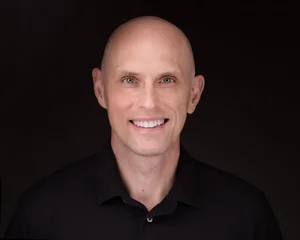
Dan Eyre, Chief Operating Officer of DeepVest, on how AI lets advisors scale the unscalable, why the next five years look like a land grab for early adopters, and what a living financial plan looks like.
One small firm grew by roughly $70 million in a single quarter, Dan Eyre says, because it did something its competitors could not: it showed prospects a quantitative and qualitative roadmap in the very first meeting. The prospect's reaction was that it was the easiest thing they had ever done.
Dan is Chief Operating Officer of DeepVest. He joins The Modern Financial Advisor Podcast, just weeks after he and Mike worked together on a Morningstar ByAllAccounts WealthTech Trends webinar, to explain how AI is finally letting advisors make every client feel like the only client without sacrificing the size of their practice. They cover why model portfolios and quarterly review blocks were an assembly-line answer, why frontier AI models still get the math wrong, how a hybrid approach with governance keeps advisors inside fiduciary guardrails, and why a static plan starts aging the moment it is delivered. Dan also shares a window of roughly five years in which early adopters can win business from firms that wait.
Connect with Dan Eyre on LinkedIn and learn more about DeepVest
What You'll Learn in This Episode
Why advisors have always had to choose between the size of their practice and the quality of their service, and how AI is removing that tradeoff
What it means to "scale the unscalable" and make every client feel like the only client
Why model portfolios and quarterly review blocks were assembly-line solutions, and what replaces them
Why the next five years look like a land grab for firms that adopt AI first, as generational wealth transfer accelerates
Why frontier AI models get quantitative questions wrong so often, and how hybrid systems keep the math deterministic
How governance, guardrails and a "fiduciary ontology" keep AI agents inside the rules of the fiduciary world
How one firm grew by roughly $70 million in a single quarter by delivering a real proposal in the first meeting
Why a static financial plan starts aging the moment it is printed, and what a living plan looks like
How couples' differing goals and divorce risk change the way advisors should capture and use client information
Why the IP of how you run your practice may become more valuable than the book of business itself
Why This Matters for Financial Advisors Right Now
What does it mean to scale the unscalable?
Dan explains that every practice with high-quality service ambitions has historically had to choose between size and quality. The things that make top clients feel like the only client in the world do not scale, because trying to deliver them to everyone would eat all of an advisor's time and destroy margins. AI, he argues, is finally filling the gaps with high-quality automation, so the service model that lives in an advisor's head can be translated into a system and extended to every client.
Why were model portfolios and quarterly review blocks the old answer?
They were the popular scaling tools of the past: put everyone into one of a few models and schedule the same hour every quarter. Dan calls that an assembly line, the antithesis of making someone feel like the only client. The emerging alternative meets clients where they are and builds a holistic, living plan that is tied to their investments and genuinely knows them.
Is there a land grab coming?
Dan describes a liminal period of roughly five years in which the firms that move first win business from those that do not, because they can demonstrate a visibly better experience just as generational wealth changes hands. Eventually these tools become table stakes and the game cycles back to rapport. In the meantime, he says, it is a time to move, whether a firm builds, buys or partners.
Why do AI models get the numbers wrong?
Dan walks through deterministic tools, which return the same answer every time, versus probabilistic tools like large language models, which guess based on statistical associations. He shares that a study across frontier models and ten investment use cases showed an 85% error rate on quantitative questions, with a later UK study landing near 88%, and cautions that results will keep improving. His point is that even a 1% error rate leaves you hunting for which 1% hit you. The answer is a hybrid system where AI orchestrates and deterministic tools do the math.
What is a fiduciary ontology, and why does governance matter?
Giving a model tools and data is not enough. Dan describes a governance layer, including what DeepVest calls its fiduciary ontology, that maps the universe of what an agent may do, in what order, and under which relationships. It gives advisors guardrails and a way to encode how their firm actually operates.
What happens when you can deliver a proposal in the first meeting?
Dan shares the story of a small firm that grew by about $70 million in a single quarter after it began presenting a quantitative and qualitative roadmap in the first meeting, in a competitive situation against firms that were not doing this. The prospect's reaction, as Dan tells it, was that it was the easiest thing they had ever done.
Why does a static plan start aging immediately?
Dan demonstrates a household view in DeepVest, using a sample couple, to show how a living plan connects goals, estate planning, tax decisions and investments. He explains "attention budgeting," where the system surfaces what most needs the advisor's attention, and works through decisions like a Roth conversion and 529 superfunding. Mike adds that a large majority of women change advisors after a divorce, which is why capturing both spouses' perspectives matters.
What is the future role of the advisor?
With longer lifespans and everyone offering advice, Dan says advice alone starts to feel flimsy. The advisors who stand out will help clients take the first steps toward their life goals, acting more like a family office. He also shares an advisor's view that, in five to ten years, the IP of how you run your practice may be worth more than the book itself.
It is not acquiring the client specifically. It is acquiring the IP of how you scalably acquire clients and keep them happy.
Resources Mentioned in This Episode
DeepVest — the AI-powered platform Dan helps lead as Chief Operating Officer
Dan Eyre on LinkedIn — connect with Dan and follow his work
Morningstar ByAllAccounts WealthTech Trends webinar — the earlier conversation where Mike and Dan first connected
Related Episodes
Why Model Portfolios Are Holding Advisors Back (and What Replaces Them) — Chris Ainsworth of Pave Finance on moving from one-size-fits-all models to customized portfolios at scale, a natural companion to Dan's argument.
How AI Will Power a New Era of Hyper Growth for Financial Advisors and Wealth Management Firms — Ian Karnell of VastAdvisor on agentic AI and growth, which pairs with Dan's land-grab thesis.
Fix This Before You Buy Another AI Tool — Kristefor Lysne of Terrapin Technologies on the data foundation firms need before automation and personalization work.
Frequently Asked Questions
What does "scale the unscalable" mean for financial advisors?
It means using AI to deliver the high-touch, customized service advisors give their best clients to every client, without hiring proportionally more people or sacrificing margins.
Can advisors rely on ChatGPT-style models for calculations?
Dan cautions against it. Large language models are probabilistic and frequently miss quantitative questions, so calculations belong in deterministic tools, with AI handling orchestration.
What is a hybrid AI system?
A system where AI decides what to do and which tools to call, while deterministic code performs the actual calculations, all inside a governance layer.
Why is there urgency to adopt AI now?
Dan sees a roughly five-year window in which early adopters win clients from firms that have not moved, before the tools become table stakes.
What is a living financial plan?
A plan connected to a client's full financial picture and investments that updates as life changes, rather than a static PDF that begins aging as soon as it is delivered.
Who is Dan Eyre?
Dan Eyre is Chief Operating Officer of DeepVest, an AI platform for wealth management firms.
Who is Mike Langford?
Mike Langford is the founder of PodBox and finservMarketing, and the host of The Modern Financial Advisor Podcast. PodBox produces podcasts for wealth tech, fintech and wealth management firms, and The Modern Financial Advisor is one of several shows his team produces. Mike has spent more than 20 years in financial services across retail and institutional segments. He was an early adopter of social media and digital marketing for advisors, and he helps firms turn a podcast into a real growth channel. If you'd like to explore having a podcast produced for your firm, reach out to Mike at podcast@finservmarketing.com